The four main Beretta systems:
Mobilchoke
Short tube with threads at the muzzle end.
Optima-Choke
Long tube with its thread band nearest the muzzle.
Optima-Choke Plus
Thicker tube with its shorter threads farther down.
Optima-Choke HP
Modern long tube with a longer recessed thread band.
What does a shotgun choke actually do?
A choke controls how quickly the shot pattern opens after it leaves the barrel. A more open choke normally gives a wider pattern. A tighter choke normally keeps more pellets together for longer.
It does not add power to the cartridge, make individual pellets hit harder or guarantee extra effective range. The barrel, cartridge, pellet material, shot size, wad and choke all affect the result.
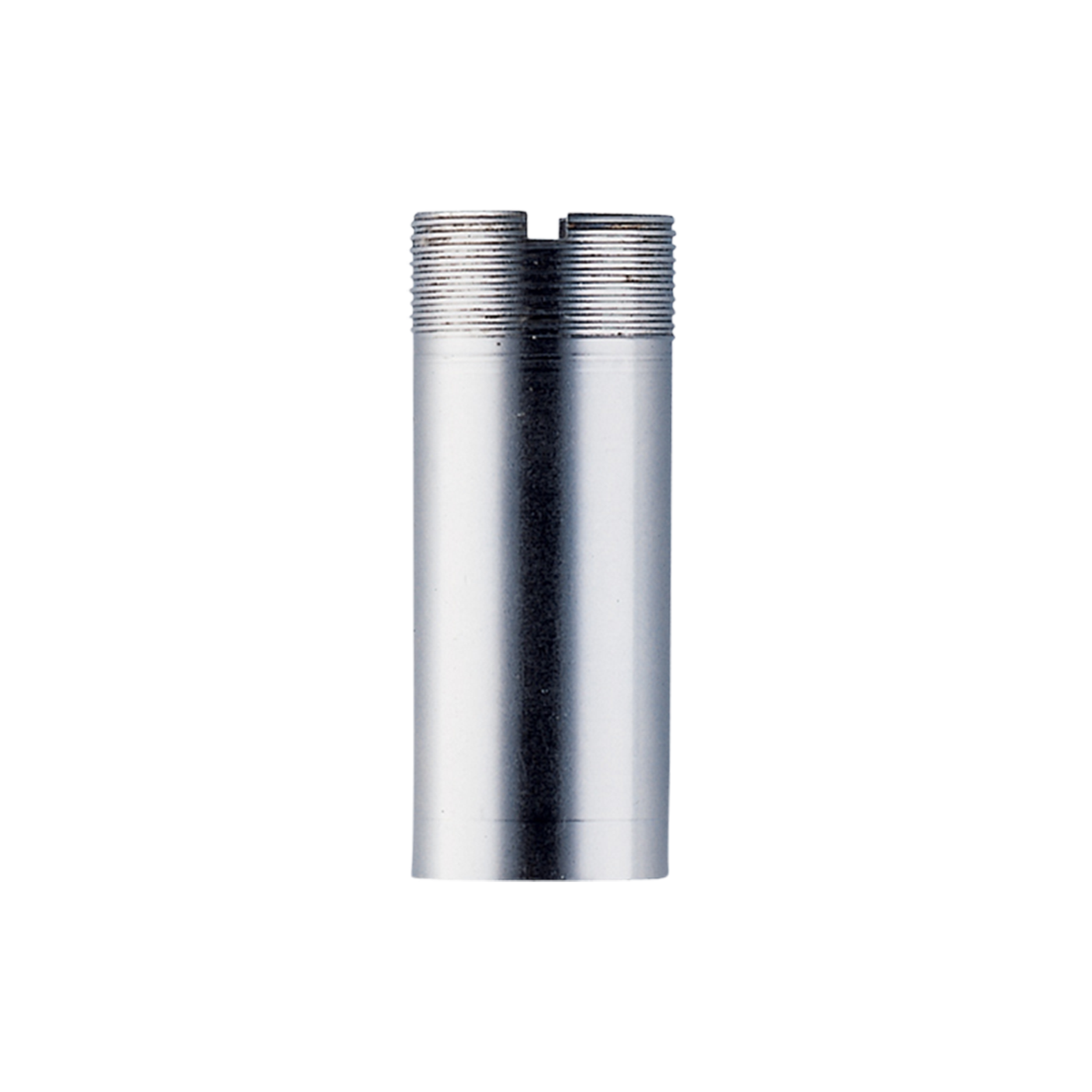
Mobilchoke flush — 12 gauge
Factory flush form for Mobilchoke barrels. Compare the genuine 12 gauge Mobilchoke flush tube.
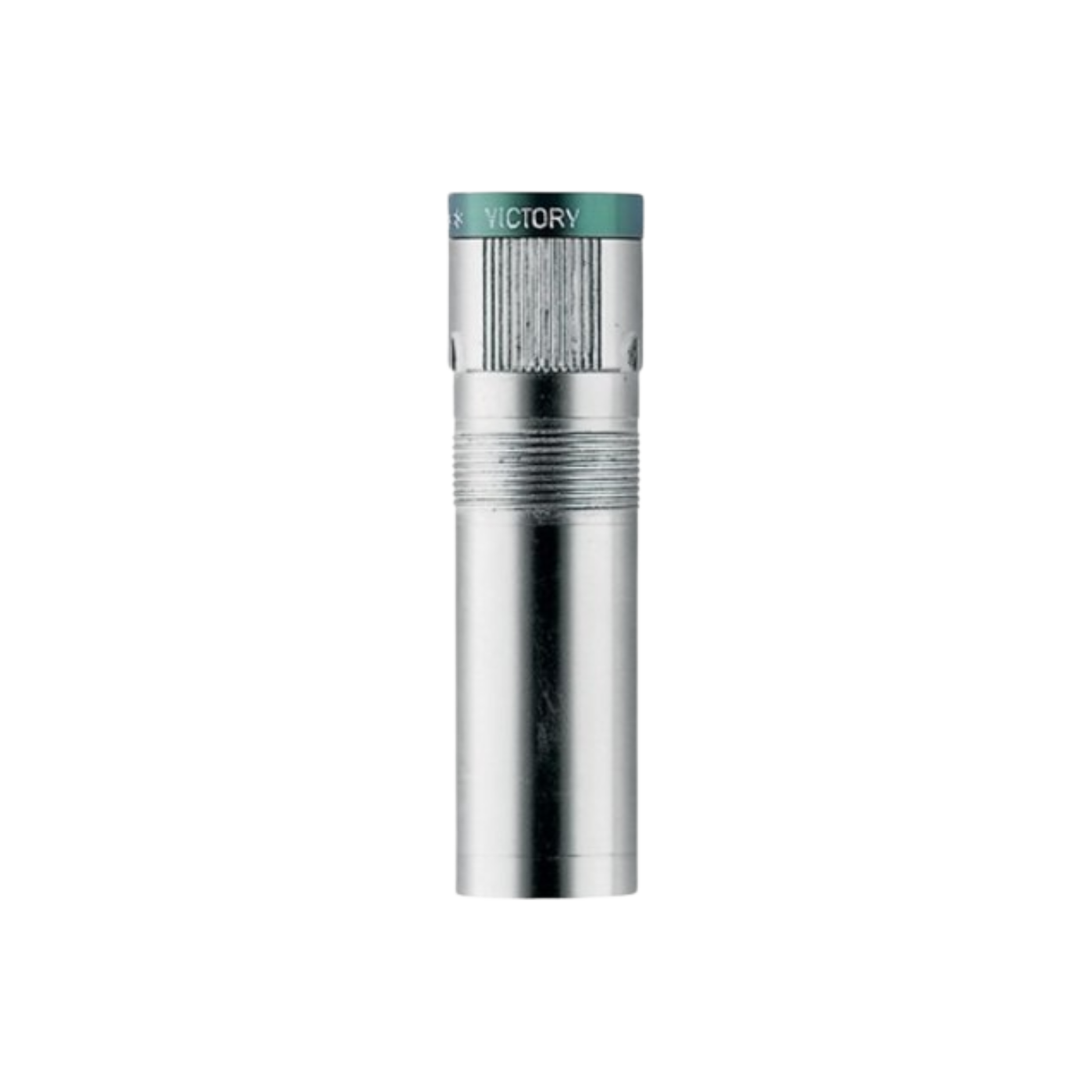
Victory extended — 12 gauge
Factory 25mm extended competition form with a colour band. See the genuine Mobilchoke Victory tube.
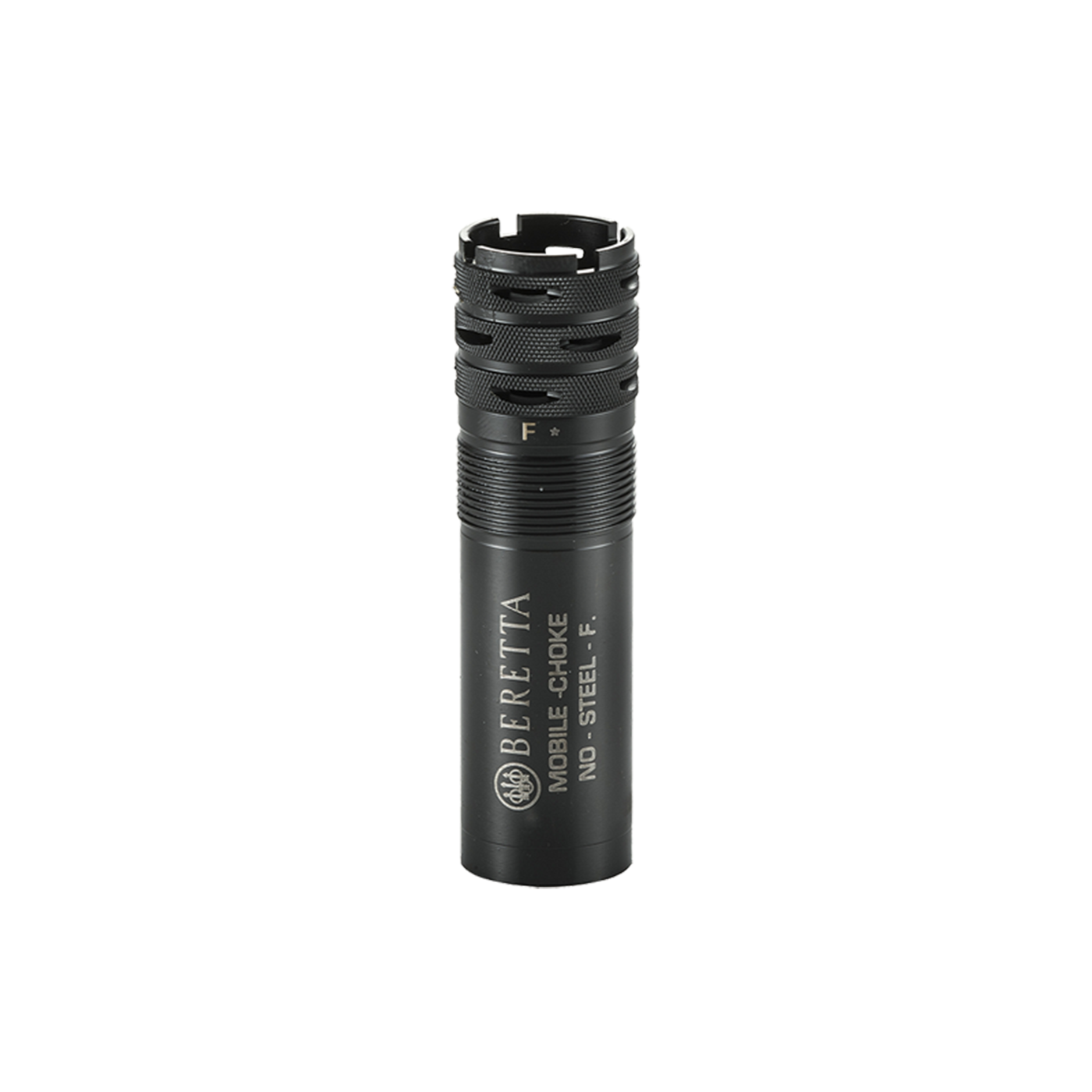
Ported extended — 12 gauge
Factory ported Mobilchoke form. For a conventional long extension, see the genuine 50mm Mobilchoke tube.
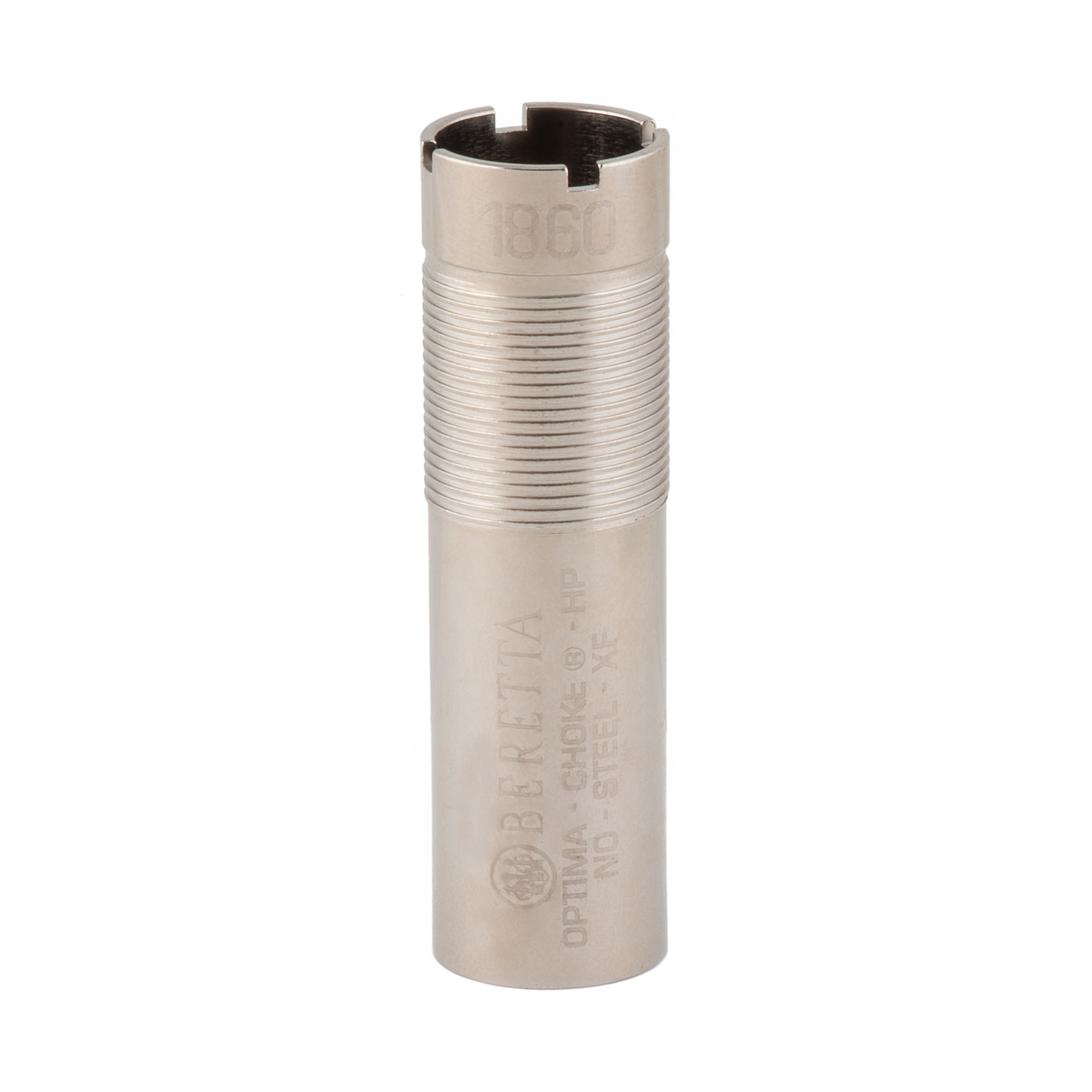
Optima HP flush — 12 gauge
Factory flush form marked for the modern OB HP family. Compare the genuine 12 gauge Optima HP flush tube.
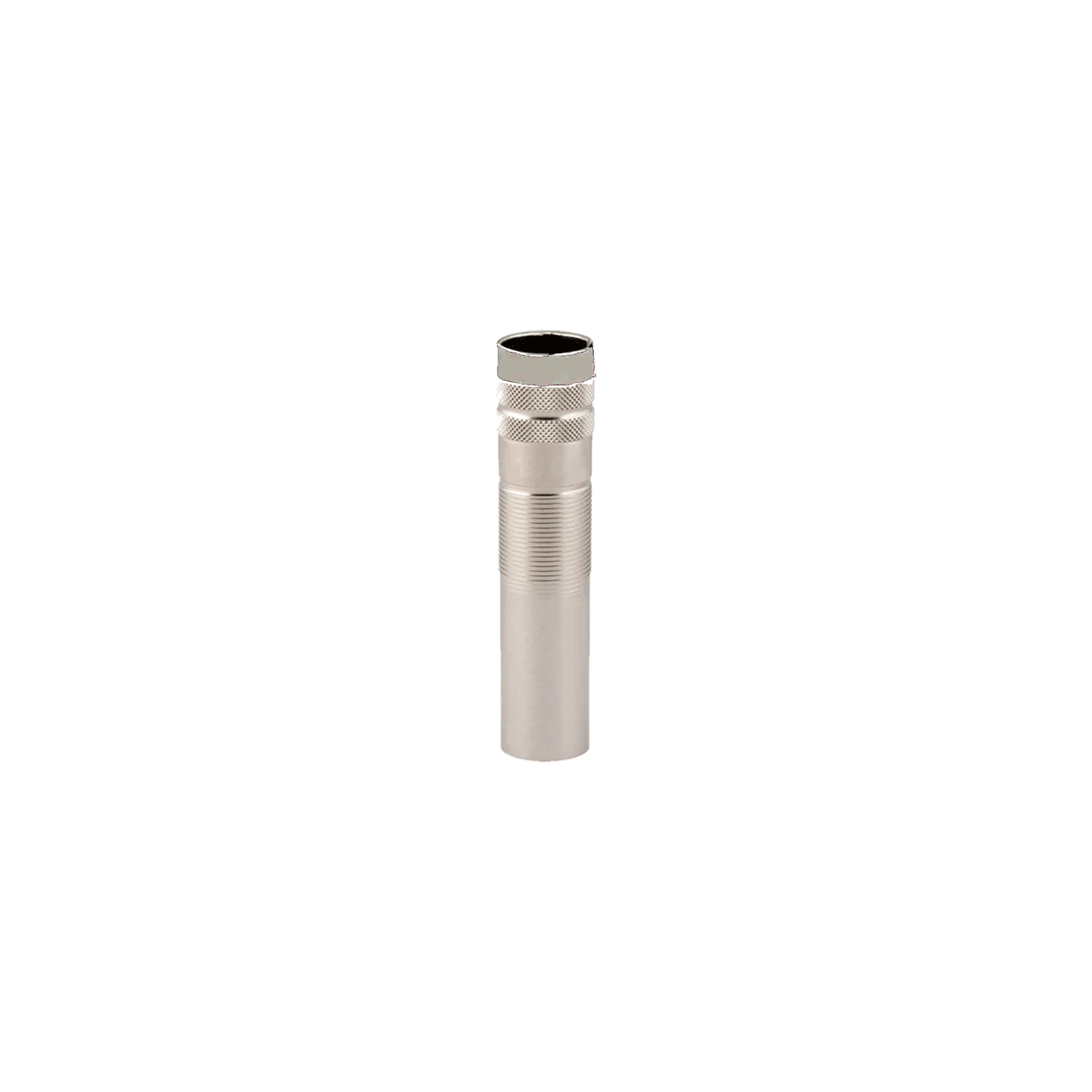
Optima HP 20mm extended
Factory colour-coded sporting form for OB HP barrels. See the genuine 20mm extended 12 gauge tube.
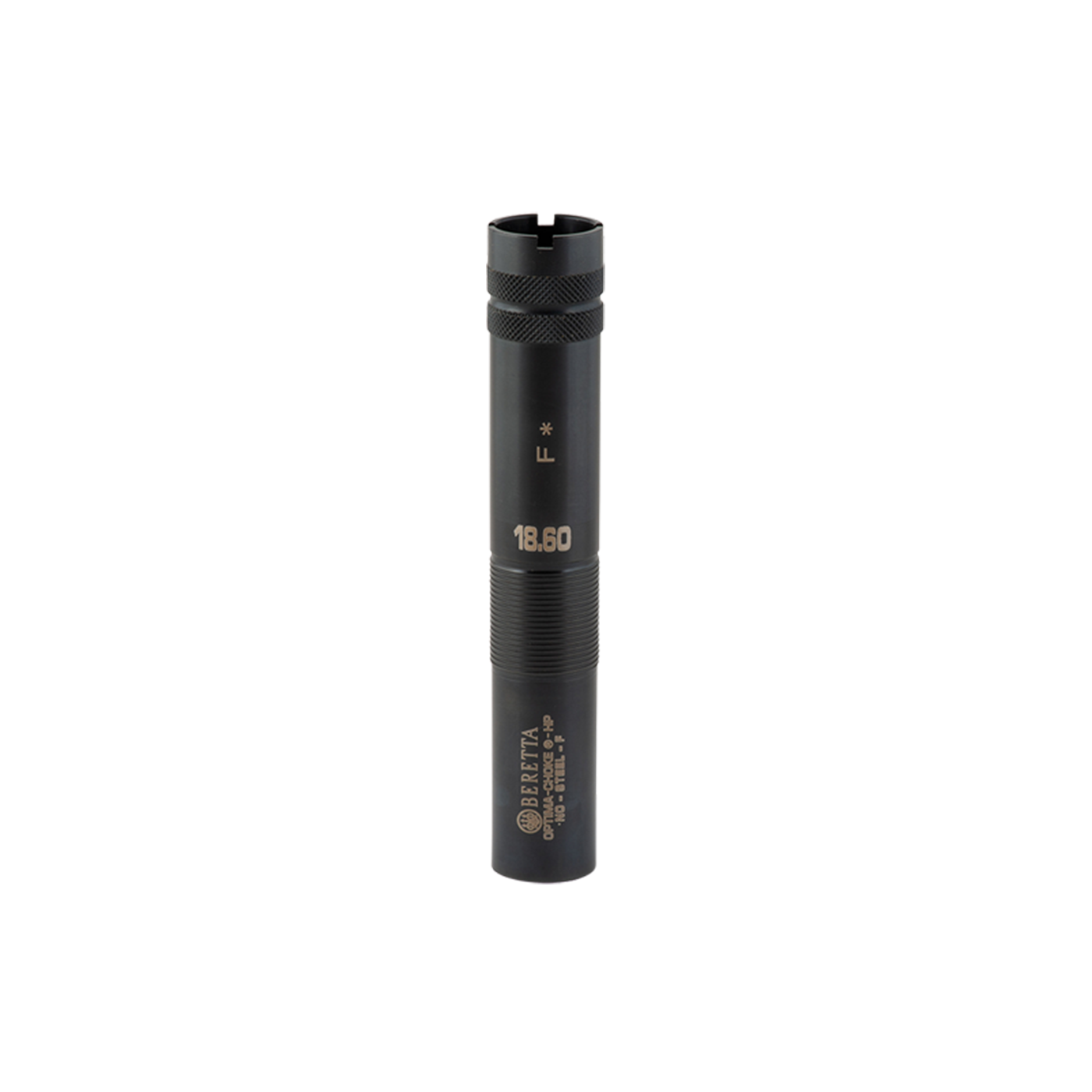
Optima HP 50mm extended
Factory long competition form. The family marking and gauge must match the barrel even when the tube looks similar.
All six photographs are unchanged official Beretta factory-choke images from Beretta's own eStore and digital asset library. They are hosted on Blue Fieldsports for this guide. Select any photograph to zoom it on this page.
Show the comparison table
| Beretta system | How to recognise it | General era | Typical applications |
|---|---|---|---|
| Mobilchoke | About 51mm in 12 gauge. The thread starts about 41.5mm from the breech end, so it sits at the muzzle end. | Mid-1980s onward. | A300 removable-choke barrels and many older 680-series field guns. |
| Optima-Choke | About 70mm. Marked Optima-Choke; 12 gauge thread begins about 50.8mm from the breech end. | Introduced in 2000. | Selected competition 391, 680-series and Teknys Gold barrels. |
| Optima-Choke Plus | About 70mm with a thicker wall; thread begins about 41.9mm from the breech end. Marked Optima-Choke-Plus. | Introduced with 391 Xtrema in 2003. | Xtrema, Xtrema2 and selected 471 Silver Hawk barrels. |
| Optima-Choke HP | About 70mm; barrel normally marked OB HP and tube marked Optima-Choke-HP. Thread begins about 40mm from the breech end and is about 19mm long. | Introduced in 2008. | Many current 686/687, 688, 694, DT11, A400, 1301 and Ultraleggero barrels. |
| XP or specialist | Optima XP is marked XP/XP Tapered and currently belongs to the SL2 family. Mobilchoke HP, old collar tubes and DT10 Vandalia tubes are separate applications. | Model dependent. | Only the explicitly marked barrel and matching factory application. |
Show the full choke-system guide
Beretta's family names describe a matched barrel and choke geometry, not merely a finish or length. Flush, extended, ported, black and colour-coded tubes can all exist within the same family.
Optima, Optima Plus and Optima HP are especially easy to confuse because all are long tubes. Their outside diameters, thread locations and thread lengths differ.
Mobilchoke is the original widely used interchangeable Beretta system. A 12 gauge flush tube is about 51mm long, with a nominal 9.15mm thread band at the muzzle end. The barrel may show only its gauge rather than an extra family code.
It remains current on selected guns, including A300 applications, and it spans 12, 20 and 28 gauge plus .410. See our 12 gauge Mobilchoke flush, 20 gauge Mobilchoke flush, 12 gauge 50mm extended and 12 gauge Victory extended options.
Mobilchoke HP used on selected SO10 and 486 barrels is a separate marked system; do not treat “HP” as decorative wording.
Optima-Choke arrived with the larger Optima-Bore competition barrel. In 12 gauge the barrel is normally marked OB beside the gauge and the tube is marked Optima-Choke.
Its thread begins about 50.78mm from the breech end and runs about 15.9mm. This leaves the thread band close to the muzzle end of the roughly 70mm tube. It appeared on selected 391 competition, 680-series competition and Teknys Gold barrels.
Optima-Choke is not Optima-Choke HP. Beretta warns that interchanging those two can damage the tube and barrel.
Optima Plus was developed for the 391 Xtrema generation and greater use of steel loads. It retained the broad Optima internal concept but used a thicker wall and a revised thread position.
In 12 gauge the thread starts about 41.9mm from the breech end, runs about 10mm and has a nominal major diameter of 20.58mm. Typical applications include Xtrema, Xtrema2 and selected 471 Silver Hawk barrels.
It is marked Optima-Choke-Plus and is not interchangeable with either Optima-Choke or Optima-Choke HP.
Optima-Choke HP moved the thread band farther back than original Optima and lengthened it to about 19mm. A 12 gauge OB HP tube has a nominal 20mm major thread diameter and the barrel is normally marked OB HP.
It is the mainstream modern family on guns such as the A400 Action, A400 Xtreme Plus, current Silver Pigeon I Field and 688 Black Performance Sport, subject always to the exact barrel.
Current options include 12 gauge flush, 20 gauge flush, 12 gauge 20mm extended and 20 gauge 20mm extended tubes.
Show the model compatibility table
| Model or family | Usual system | What to watch |
|---|---|---|
| A300 removable-choke barrels | Mobilchoke | Slug, tactical and market-specific barrels may differ or be fixed. |
| Older 680-series field guns | Usually Mobilchoke | The family spans decades; current barrels can use Optima HP. |
| 391 competition / Teknys Gold | Often Optima-Choke | 391 Xtrema field guns moved to Optima Plus. |
| Xtrema / Xtrema2 | Optima-Choke Plus | Do not confuse the recessed threads with Optima HP. |
| Current 686/687 field families | Often Optima-Choke HP | Older guns commonly differ; read OB/OB HP and tube markings. |
| 688, 692, 694 and DT11 | Usually Optima-Choke HP | Fixed trap barrels and the DT10 Vandalia exception require separate checks. |
| A400 family | Usually Optima-Choke HP | Confirm the exact barrel and gauge; replacement barrels decide the fit. |
| A400 Xtreme Plus | Optima-Choke HP | Use only tubes matching the OB HP barrel and steel-shot instructions. |
| 1301 | Optima-Choke HP | Some tactical barrels are fixed; never assume removable chokes. |
| SL2 | Optima-Choke XP | XP is a separate marked family and not a substitute for Optima HP. |
Remember: a replacement barrel can use a different system from the receiver's original barrel. Match the tube to the barrel in front of you.
Show the specialist exceptions
Optima-Choke XP
Beretta's current over-and-under manual identifies XP/XP Tapered as a separate family, and Briley currently lists it for new SL2 models. It is not Optima HP with a newer name.
Mobilchoke HP
Selected premium SO10 and 486 barrels use tubes explicitly marked Mobil-Choke HP. Beretta warns against using a Mobil HP tube in an ordinary Mobil barrel. The family wording must match.
Early A302/A303 collar system
Some early A302 and A303 barrels used a smooth, unthreaded insert retained by a collar which screwed over the muzzle. Beretta says this obsolete type is no longer available from the factory. It is not Mobilchoke.
DT10 Vandalia
An early DT10 Vandalia trap application used a tube which resembles a flush Optima tube but is not interchangeable with it. Identify it as its own application.
Fixed-choke barrels
If there is no removable tube and no internal thread, the barrel is fixed choke. Never fire a threaded barrel without its correct tube installed, and never try to convert a fixed barrel with a choke key.
Names such as flush, extended, Victory, ported, black, DLC and colour-coded describe form or finish. They do not override the underlying family, gauge and barrel marking.
Show the constriction and use table
Beretta commonly marks the tube with circles or stars, letters and rim notches. One star/notch is the tight end; five is the open end. Figures below are useful working ranges, not guaranteed Beretta engineering dimensions.
| Beretta mark | UK name | US name | Typical nominal constriction | General use |
|---|---|---|---|---|
| 0 / * / one notch | Full | F | .030–.040in | Tight patterns where the chosen load patterns evenly. |
| 00 / ** / two notches | Three-quarter | IM | .025–.030in | More distant targets; generally not recommended for steel. |
| 000 / *** / three notches | Half | M | .015–.020in | A useful general-purpose starting point. |
| 0000 / **** / four notches | Quarter | IC | .005–.010in | Close to medium sporting and field use. |
| C0000 / C**** / five notches | Cylinder | CL/CYL | 0–.005in | Close and fast targets where a wider pattern helps. |
Some competition sets also include Skeet, Light Modified or extra-tight constrictions. Read the stamped letters as well as counting notches. A genuine Optima HP flush tube should still be checked against the actual barrel and intended cartridge.
No chart can promise that one constriction is perfect at a fixed distance. Pattern the cartridge you actually intend to use.
Show the shooting guide
Steel shot and proof
The marks on the exact gun, barrel, tube and cartridge matter more than a generic chart. “SP” means Steel Proof on a Beretta tube; HP or XP wording indicates the relevant high-performance family, but the barrel and cartridge must also be suitable.
Beretta's current semi-automatic manual says Full and Improved Modified are not recommended for steel shot. It advises open chokes (Cylinder, Improved Cylinder and Modified) for best results. Follow the manual supplied with your gun if it is more restrictive.
High Performance steel requires a suitably proofed barrel, normally identified in the UK by the fleur-de-lys mark. Steel may pattern tighter than lead through the same nominal choke. If any marking is uncertain, stop and have the gun checked.
When to change choke
- The normal target or quarry distance has genuinely changed.
- You change cartridge, pellet material, shot size or wad and the pattern changes.
- A pattern plate shows thin patches, excessive tightness or a point-of-impact problem.
- You buy a used gun or replacement barrel and need to establish what is fitted.
Care
Unload the gun completely before touching the muzzle. Use the correct Beretta choke key, clean the tube and barrel threads, apply a light suitable choke grease and keep the tube correctly seated. Never fire a threaded barrel with no tube installed.
If a tube binds, stops early or sits at the wrong height, do not force it and do not fire the gun.
Show replacement choke options
Each option below is a separate live Blue Fieldsports product, so the family, gauge and form are clear before you select it.
Flush — 12 gauge
The standard flush form for 12 gauge Mobilchoke barrels.
View 12 gauge choke50mm extended — 12 gauge
A long extended factory option for compatible 12 gauge Mobilchoke barrels.
View extended chokeFlush — 20 gauge
The standard flush form for 20 gauge Mobilchoke barrels.
View 20 gauge chokeFlush — 12 gauge
A genuine flush tube for 12 gauge barrels marked OB HP or OptimaChoke HP.
View 12 gauge chokeFlush — 20 gauge
A genuine flush tube for compatible 20 gauge OptimaChoke HP barrels.
View 20 gauge choke20mm extended — 12 gauge
A colour-coded extended sporting option for 12 gauge OptimaChoke HP barrels.
View extended chokeThese manufacturer-neutral TGS Outdoors videos explain the practical side of choke choice, patterning and steel shot:


Show sources and further reading
Sources and further reading
- Beretta official choke-family guide.
- Beretta 2026 semi-automatic shotgun manual.
- Beretta 2025 over-and-under shotgun manual.
- Beretta factory choke catalogue.
- Briley Beretta choke identification photographs.
- Carlson's choke identification and dimensions.
- Muller Beretta interchange guide.
- BASC guidance on non-lead shot.
Compatibility varies with gauge, market, barrel and production change. This guide helps identification but does not replace the markings and manual supplied with the gun. If anything does not seat exactly as it should, do not fire it.
The Definitive Beretta Choke Guide